
02/06/2026
The Horizon of Decarbonization Possibilities: Is Technological Escapism Inevitable?

Sophie BOUTILLIER

Dorian MAILLARD
In the face of global warming – driven by excessive greenhouse gas (GHG) emissions from human activity – the most straightforward solution today is to decarbonize our economy. Decarbonization entails to drastically reduce the consumption of fossil-based energy sources (coal, oil, and methane) so that, by 2050, we emit no more GHGs than what nature (forests, oceans, etc.) and various technological solutions can absorb. However, contrary to what the etymology of the term might suggest, this does not mean eliminating all uses of the chemical element carbon. Rather, it involves preventing the release of stored carbon atoms which, when fossil molecules are burnt, chemically combine with oxygen to form carbon dioxide (CO₂), a harmful compound. The challenge is considerable, as the combustion of these molecules accounts for nearly 80% of the world’s primary energy use.
Four technical options can be considered: 1/ Maintaining the use of fossil carbon-based molecules while ensuring that the resulting CO₂ emissions are captured, reused, or stored before being released into the atmosphere (CCUS); 2/ Developing new technical processes that eliminate the need for these molecules by replacing them with low-carbon alternatives (renewable energy, bio-based carbon, etc.); 3/ Acting on the effects rather than the causes by directly modifying the climate or the Earth’s energy balance through chemical processes (geoengineering); 3/ Reducing emissions at the source by adopting rational optimization practices (sobriety and cooperation), or even reducing usage levels altogether.
A Simple Matter of Technological Progress?
Although central to current global decarbonization strategies, the first three options are double-edged. In fact, reliance on technological solutions aims to avoid fundamentally questioning the current model of industrial growth. The promotion of CCUS technologies is a perfect example. These are based on the implicit idea that we can continue burning hydrocarbons indefinitely, as the resulting CO2 emissions become a non-issue: either through conversion into new commercial resources (e-fuels, fertilizers, cement, etc.), or through capture and long-term underground storage. In other words, this technological flight forward ensures “business as usual,” transforming environmental externalities into drivers of value creation through a quasi-miraculous circular economy.
Technological progress thus appears more than ever as an unquestionable horizon for the future of our societies. This observation gives renewed relevance to an expression rooted in the first automobile races of the late 19th century: “you can’t stop [technical] progress” (Jarrige, 2022).
Elegant Solutions on Paper, Difficult Implementation in Practice
However, on closer scrutiny, it appears that this technophile trajectory of decarbonization raises several concerns. A key issue lies in the practical deployment of these technologies. In France, their selection is part of national ecological planning, which aims to equip each sector (transports, industry, farming…) with the solutions needed to achieve carbon neutrality. Once optimization of existing processes reaches its limits, attention turns to alternative technical solutions capable of bridging the remaining gap. This leads to quantified deployment targets for each identified technology. Industry, for example, is expected to reduce its net GHG emissions by more than 90% by 2050, notably through the deployment of quantified CCUS targets to store the carbon emissions that cannot otherwise be reduced.
However, while these technological solutions may appear ideal on paper, they can be completely misaligned with the territorial contexts in which they are meant to be deployed (Maillard, 2025). As a result, they may remain at the project stage and ultimately fail to deliver any tangible decarbonization. Relying on a single option (purely technological) is therefore highly unreasonable, as it risks missing climate commitments altogether.
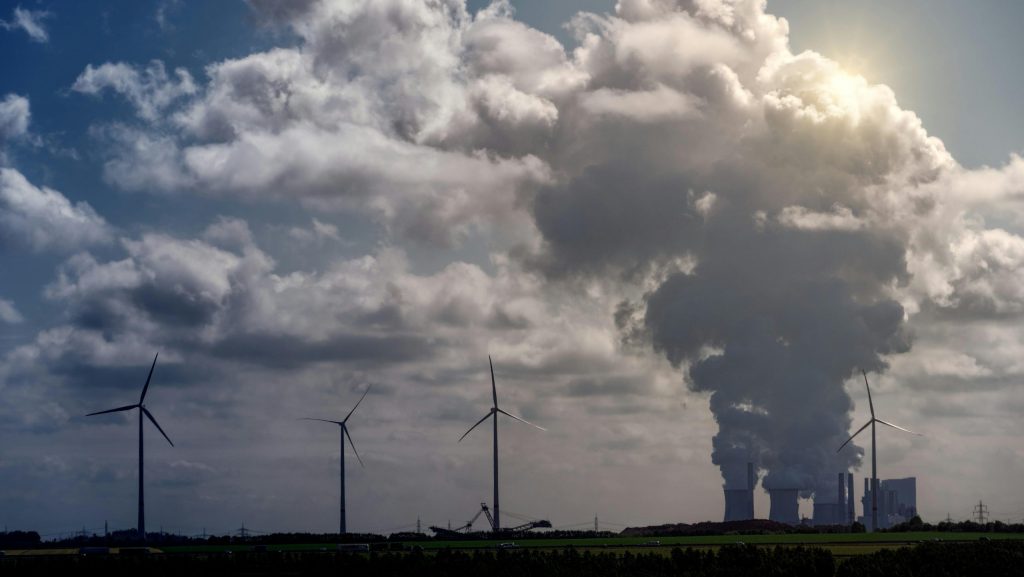
Photo :Johannes Plenio
One Form of Progress Conceals Another
The objective of decarbonization is also problematic because of how the notion of progress is used. Each society constructs its own conception of progress (technical, philosophical, religious, etc.), shaped by its specific historical and spatial context. The Western conception of progress is a clear example: it first stemmed from the Humanist revolution; it was then developed through Enlightenment philosophy; and finally systematized during the industrial revolutions of the 19th century. It is based on a linear view of time – of Christian influence – in which the future is necessarily better than the past. This conception underwent a major shift in the 19th century, when progress became closely associated with technology, seen as the primary driver of social advancement, despite the simultaneous intensification of unregulated exploitation of both humans and the environment.
The growing consumption of fossil energy, combined with the spread of steam engines, further reinforced the association between progress and polluting energy sources. The diffusion of machines throughout society also gave rise to new utopian narratives promoting a technicist, evolutionist, and Promethean vision of history. For instance, chemist Marcelin Berthelot predicted in the late 19th century that by the year 2000, synthetic chemical energy would triumph over coal and miners’ strikes (Fressoz, 2024). In short, machines and new energy sources were seen as guarantees of social peace. Today, this utopia persists, as illustrated by Elon Musk’s belief that artificial intelligence will free humanity from labor and trade unions (Les Échos, 20/11/2025).
Yet the chaotic history of technology shows that progress is not linear. It is marked by abandonments, failures, and both fulfilled and unfulfilled promises. Power dynamics – often destructive – between firms frequently play a decisive role, with dominant actors imposing their own technical systems upon others, despite significant negative externalities for the impacted territories (e.g., path dependence: Martin, Sunley, 2006). The history of technology offers many such examples, including the abandonment of the electric engine, which – until the First World War – was considered the future of motorized mobility (Jarrige, 2022). After all, was not the first vehicle to exceed 100 km/h in 1899—the Jamais Contente—electric?
Toward Another Horizon?
The contradictions of this technological flight forward can be explained by the fact that these solutions preserve the economic status quo. Is this really surprising from industrial societies still shaped by the aporias of modern thought (nature–culture dualism) and capitalist organization? Beyond decarbonization, maintaining these principles can only accelerate the degradation of the relationship between industrial society and the Earth system, particularly through intensified exploitation of its biophysical components (e.g., extractivism).
How, then, can we envision a large-scale exit from fossil fuels? These remain massively used across all sectors of the economy. Moreover, new drilling technologies continue to push the limits of onshore and offshore extraction, leading scholars to speak of a “carbon trap” (Unruh, 2000). Moreover, according to the International Energy Agency, coal consumption reached new records in 2025, paradoxically driven in part by increased electricity demand for producing decarbonization technologies (e.g., steel production; Les Échos, 17/12/2025). Fossil fuels have been dominant energy sources for two centuries, profoundly transforming work, production, and consumption patterns to the point of becoming indispensable, as recent geopolitical crises (Yellow Vests movement, wars in Ukraine and Iran) have shown. Agreements from the Conferences of the Parties (COP) and reports from the Intergovernmental Panel on Climate Change (IPCC) have so far changed little, despite our knowledge of available solutions. This situation is not without historical precedent, as Jared Diamond (2006) shows in Collapse: How Societies Choose to Fail or Succeed.
Yet at a time when international divisions are more intense than ever – particularly around control of oil resources – are we capable of cutting the Gordian knot of fossil fuel dependence and implementing a coherent decarbonization pathway? Unfortunately, this remains highly uncertain.
References
Diamond J., 2006, Effondrement : comment les sociétés décident de leur disparition ou de leur survie, Gallimard.
Fressoz J.-B., 2024, Sans transition, Seuil.
Jarrige F., 2022, On arrête (parfois) le progrès, L’échappée.
Maillard D., 2025, « La décarbonation à l’épreuve des territoires », Blog Alternatives économiques-Réseau de recherche sur l’innovation, 30/10/2025.
Martin R., Sunley P., 2006, Path Dependence and Regional Economic Evolution, Journal of Economic Geography, 6, 395-437.
Unruh G., 2000, Understanding carbon lock-in, Energy Policy, 28(12), 817-830.
The Authors
Sophie Boutillier is a Professor of Innovation Economics and Entrepreneurship at the Université du Littoral Côte d’Opale. She is also a member of the executive board of the Research Network on Innovation. Her current research primarily focuses on the decarbonization of heavy industry.
Dorian Maillard is a PhD-student in Geography at the LOTERR laboratory at the University of Lorraine. He is also an associate researcher at the Chôros rhizome. His doctoral research examines the renewal of public policy in declining territories, particularly in light of the territorialization of industrial decarbonization challenges.
FOCUS :

Vol 11 - Les possibles de la décarbonation de l’industrie : au-delà du progrès technique