10/11/2026
Reindustrializing: how can we help innovative SMEs turn their technologies into lasting industrial businesses?

Chloé ZANARDI
“An SME needs orders. It cannot survive on proof-of-concept projects and experiments alone.” This observation, made by the head of an innovative SME interviewed as part of our research, sums up one of the major challenges facing small businesses: a good idea does not automatically turn a profit.
A technology may work, attract interest and secure funding for research and development, yet still prove difficult to bring to market. Job creation and business growth do not automatically follow from technological innovation.
At a time when reindustrialization and technological sovereignty are becoming increasingly prominent in public debate, this issue deserves particular attention.
SMEs are essential to the economy, but their growth remains uncertain
As the European Union seeks to strengthen its strategic autonomy and technological sovereignty, one figure is worth remembering: 99.8%¹ of businesses operating in Europe are small and medium-sized enterprises (SMEs).
Often described as the “backbone of the European economy” (1), SMEs are naturally a major focus of public economic policies. Yet the tangible results of these efforts can sometimes be difficult to see.
While the technological excellence of SMEs, their agility and their ability to bring new solutions to the market are well documented (Zighan and Dwaikat, 2023; Ferreira et al., 2024), their capacity to grow and thrive over time is far less certain.
SMEs face what researchers call the “liabilities of smallness and newness”: the disadvantages and vulnerabilities that come with being small and relatively young. They often have fewer resources, less in-house expertise and less established legitimacy than larger, longer-standing businesses (Choi et al., 2022; Amoa-Gyartens & Dhilawayo, 2024).
The structure of the French business landscape illustrates just how difficult it can be to move from one stage of growth to another. In 2023, France had approximately 174,600 SMEs, excluding microenterprises, but only 7,442 intermediate-sized enterprises (ETIs, according to the French classification) (2). Of course, not every SME is destined to become a mid-sized company. But this gap highlights how challenging it can be to scale up and build a business that remains viable over time.
The prototype works… now what?
For an innovative SME, turning a technology into a commercially viable product or service is a particularly delicate stage. It even has a name: the Valley of Death (Ellwood et al., 2022).
The term describes the difficulties businesses encounter between technological research and development and the commercialization of their innovations. These challenges may be financial, technological, managerial or commercial, and can also stem from public policies (Meijer et al., 2019).
Take an SME developing an industrial sensor. The tests are successful and potential customers show interest. But the company now needs to manufacture the product at scale, guarantee its quality, obtain the necessary certifications, organize deliveries and, above all, secure actual orders. Meanwhile, it still has employees and suppliers to pay. Simply surviving this stage becomes a challenge in itself.
Despite extensive research and the existence of numerous support schemes, we still do not fully understand why so many SMEs struggle to cross this Valley of Death (Ellwood et al., 2022).
This raises a fundamental question: why do some SMEs manage to make it through while others remain stuck?
Working with large corporations without losing independence
One of the ideas behind my doctoral research, completed in 2024, was that part of the answer might lie in the relationships innovative SMEs develop with large companies as they grow. Working with major industrial groups, even when they may also be competitors, can play an important role in SME’s development. Such partnerships can open up new markets and provide access to resources that would otherwise be extremely difficult for a small business to mobilise on its own (Zanardi, 2024; Zanardi et al., 2025).
But coopetition between large corporations and SMEs, in other words, cooperation between businesses that also compete with one another, reveals just how ambivalent these relationships can be. They create opportunities, but they can also expose SMEs to risks of dependency or the appropriation of their knowledge.
This does not mean that such collaborations are necessarily harmful to SMEs. But the conditions under which they take place deserve careful consideration. How is the value created together shared between the SME and the large corporation? What rights does each party retain over its own knowledge and the results developed jointly? Is the SME still free to work with other customers? Business leaders need the means to address these questions. Better access to expert advice and mediation mechanisms throughout the partnership could help them do so.
Ultimately, this research brings us to the central question that SME leaders themselves face: what entrepreneurial strategies, inter-organizational relationships and ecosystem conditions enable innovative SMEs to cross the Valley of Death and achieve sustainable growth?
Manufacturing in France: with what equipment and resources?
Let’s return to our SME developing an industrial sensor.
When the time comes to move from a prototype to mass production, very practical difficulties begin to pile up, particularly when it comes to securing the necessary equipment and human resources.
French public authorities are trying to address these challenges. The Première usine (“First Factory”) scheme, part of the France 2030 investment plan, aims to support the creation of initial production facilities, including demonstration and pilot sites, as well as the development of shared production facilities. Its overall results will be worth examining.
Meanwhile, resource-sharing arrangements are also emerging directly within business ecosystems. Toulouse White Biotechnology (TWB), a public-private consortium operating under the supervision of INRAE, INSA Toulouse and CNRS, seeks to support the ecological transition by building bridges between academic research and industry. One way it does this is by providing access to facilities and equipment. For example, PILI, a start-up specializing in bio-based, more environmentally friendly dyes, was able to collaborate with TWB to establish itself on its site and gain access to the demonstrator’s facilities, equipment and expertise.
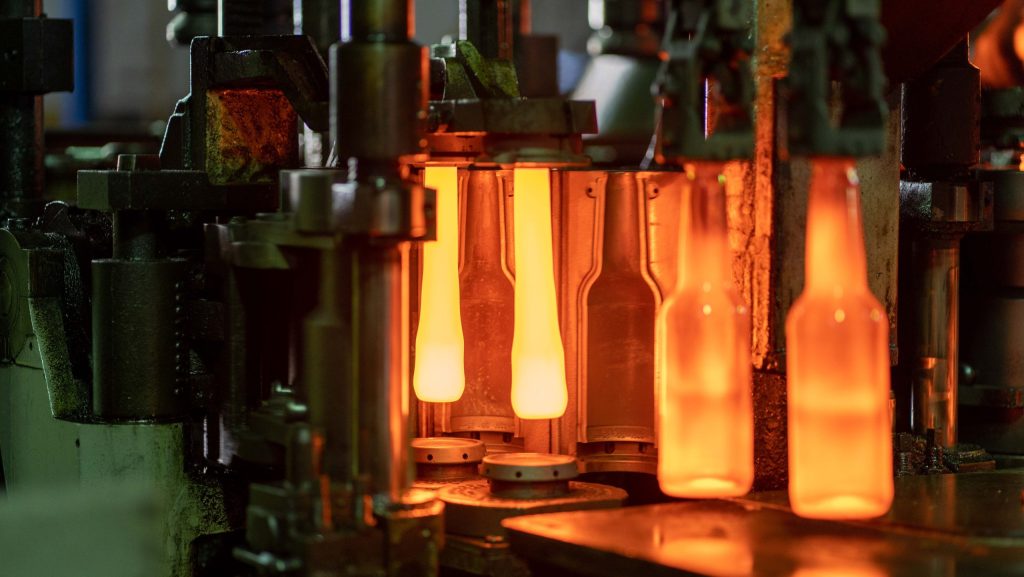
Photo : keeganj checks
Financing growth: how much, for how long and on what terms?
Once an SME has financed the early stages of developing an innovation, it must find the resources needed to industrialize and commercialize it. This means investing before it has even generated its first revenues, while dealing with certification delays and technical adjustments.
But how much capital should it raise, when should it raise it and under what conditions? European programs seek to attract investment into businesses developing technologies considered strategically important, helping them scale up. One example is the EIC STEP Scale Up program, which provides investments ranging from €10 million to €30 million.
Yet these schemes cannot meet the needs of every SME. Some businesses are already too advanced to qualify for support intended for early-stage development, but their level of technological maturity, the well-known Technology Readiness Level, or TRL, remains too low to attract the capital they need for industrialization. Others, regardless of their maturity, are working on technologies that are not, or not yet, considered strategic. And, of course, raising funds does not remove the need to find customers and secure orders.
Two challenges therefore overlap: enabling a business to grow without creating new forms of dependency, and making it easier for SMEs to access markets, particularly public procurement. This last point is especially important given the state’s prominent role as an economic buyer, even though the question of SME access to public procurement remains insufficiently addressed in Europe.
Does the push for technological sovereignty create markets?
Labelling a technology as “strategic” is no guarantee that the SMEs developing it will find customers. In our research, the value of funding for research was widely acknowledged. But we also found that some projects, despite receiving funding and support, ultimately reached maturity without generating a single actual order.
One possible approach for public authorities would therefore be to link pilot projects more directly to procurement procedures, giving SMEs access to contracts large enough to sustain their businesses. Another way of reducing risk is to diversify a company’s activities. “If we lose an arm, we can still function,” as one business leader put it when explaining why his company operated in several markets. Diversification can reduce certain forms of dependency, but it also requires adjustments that can be costly, as well as substantial commercial effort from an SME.
Supporting businesses, not just their projects
Supporting innovation also means, more broadly, creating the conditions for businesses to manufacture products, find markets and retain their independence in decision-making. This calls for an ecosystem-based approach. Our research project, supported by RRI, will therefore explore how business leaders’ strategies, their relationships with partners and the characteristics of their ecosystems interact throughout the different stages of business development.
In particular, we will seek to understand when support schemes and partnerships genuinely help SMEs become stronger and more resilient, and when, on the contrary, they risk maintaining or reinforcing certain forms of dependency. The question, then, is not simply how many innovations we can bring into existence. More importantly, it is whether we are giving the businesses behind them the means to turn those innovations into lasting economic and industrial activities.
Notes
(1) European Commission: Directorate-General for Internal Market, Industry, Entrepreneurship and SMEs, Schulze Brock, P., Katsinis, A., Lagüera González, J., Di Bella, L. et al., Annual report on European SMEs 2024/2025 – SME performance review 2024/2025, Publications Office of the European Union, 2025, https://data.europa.eu/doi/10.2760/7714438
(2) INSEE, 2025, Le tissu productif français par catégorie d’entreprises en 2023, accessed 14/07/2026, retreived from: https://www.insee.fr/fr/statistiques/8675639
More :
Amoa-Gyarteng, K., & Dhliwayo, S. (2024). Cultivating success: organizational culture’s influence on innovation and performance in SMEs. Cogent Business & Management, 11(1). https://doi.org/10.1080/23311975.2024.2397070
Choi, Y. R., Ha, S., & Kim, Y. (2022). Innovation ambidexterity, resource configuration and firm growth: is smallness a liability or an asset? Small Business Economics, 58(4), 2183–2209. https://doi.org/10.1007/s11187-021-00507-3
Ellwood, P., Williams, C., & Egan, J. (2022). Crossing the valley of death: Five underlying innovation processes. Technovation, 109. https://doi.org/10.1016/j.technovation.2020.102162
Ferreira, J. J., Candeias Fernandes, A. J., & Gerschewski, S. (2024). Innovative business models of SMEs: state-of-the-art and future research agenda. Journal of Small Business and Enterprise Development, 31(3), 445–472. https://doi.org/10.1108/JSBED-10-2023-0505
Meijer, L. L. J., Huijben, J. C. C. M., van Boxstael, A., & Romme, A. G. L. (2019). Barriers and drivers for technology commercialization by SMEs in the Dutch sustainable energy sector. Renewable and Sustainable Energy Reviews, 112, 114–126. https://doi.org/10.1016/j.rser.2019.05.050
Zanardi, C. (2024). David et Goliath : étude des stratégies de coopétition entre les PME et les grands groupes. Université de Montpellier.
Zanardi, C., Le Roy, F., & Gast, J. (2025, June 27). Réarmement : l’indispensable coopétition entre petites, moyennes et grandes entreprises de la défense. The Conversation.
Zighan, S. M., & Dwaikat, N. Y. (2023). Exploring organisational agility in SMEs. International Journal of Entrepreneurship and Small Business, 49(4), 561–576. https://doi.org/10.1504/IJESB.2023.132854
The Author
Chloé ZANARDI is an Assistant Professor of Strategy, Entrepreneurship and Innovation at TBS Education (Toulouse, France). She holds a PhD in Management and her research focuses on cooperation and coopetition strategies between small and medium-sized enterprises (SMEs) and large firms, as well as entrepreneurship and innovation dynamics in strategic sectors, particularly in relation to sovereignty and reindustrialisation. She is the recipient of the 2026 BONUS RRI–CDC Award in the “Innovation, Territories and Sustainable Development” category for her research project on the development of innovative SMEs.
FOCUS :