11/05/2026
Does Indian Cotton Crisis Have Historical Allusions? Technological Development Sheds New Light

Avik RAY
Amidst recent geopolitical turbulence, the Indo-US trade deal has sparked Indian farmers’ displeasure afresh. Two countries have recently released an interim framework for a trade deal that may boil down to an agreement that would lower tariffs. A joint statement said India would either eliminate or reduce tariffs on all U.S. industrial goods and a wide range of U.S. food and agricultural products, including nuts, fresh and processed fruit, cotton, soybean oil, wine and spirits. Here is the problem: farmers’ organizations claimed that along with many agri-products, zero-tariff raw cotton imports from the U.S. will affect domestic prices and keep growers at stake. Various bodies of cotton farmers have slammed Union Commerce Minister Piyush Goyal’s recent statement that if India imports raw cotton from the US, processes it domestically, makes cloth, and exports the finished products to the U.S., then the country can also avail a zero reciprocal tariff—just like Bangladesh who enjoys such benefits. Farmers’ organisations stated that the Centre has compromised the interests of Indian cotton farmers by taking such a stand in the trade deal.
Currently, an 11% duty on cotton imports has been imposed by India. Duty-free imports from the world’s largest exporter may put pressure on domestic prices. On the other hand, the Government claimed that the impact could be minimal and limited to extra-long staple cotton under a quota. India, the world’s second-largest producer, struggles to meet the industry’s demand for extra-long cotton and relies on imports from Australia, Brazil, Egypt, and the U.S.
So, the question pops out: what is an extra-long-staple of cotton? Does cotton plant produce fibre of a certain length only? Why does India not produce extra-long cotton? What history tells us about cotton cultivation in South Asia and the textile industry? How has the industry-set standard of cotton fibre length come to dominate the modern textile industry? In this article, we delve deeper into the history of the technology application that brought about the broader agrarian change.
The Indian subcontinent is one of the independent centers of cotton domestication. Gossypium arboreum or tree cotton was domesticated here and later Gossypium herbaceum was introduced in the early historic period. Both the species, native and naturalized, had been cultivated across the corners of the subcontinent. Historians say that cotton had been grown in almost every part of the Indian subcontinent between the 12th and 18th centuries in widely different agroecological conditions, from the north-western provinces to central India, from the black soil-rich Deccan plateau to the Bengal basin extending to the north-eastern hilly regions. Two species produce short to medium staple or fibre length. Cotton fiber displayed remarkable diversity in color, texture, staple length, yield, and the capacity to withstand environmental stress. The quality of cotton textile also varied from very coarse to premium types, from world famous finest Muslin to clothes of everyday use. It used to cater to diverse choices of consumers, local or regional to global. Owing to a huge demand and appreciation, a large volume of cotton textile was exported to Europe, various parts of Asia, and the Middle East. These anecdotes are illustrative of a luminous cotton culture of the subcontinent, that was built on widely varying cotton, fine craftsmanship, networks of stakeholders, and expanding global trade.
The entry of American cotton (G. hirsutum) in the late eighteenth century by the British East India Company has sown the seeds of decline. Thereafter, it was initially attempted in various pockets of the subcontinent but met with little success. As a result, the acreage was limited to 2-3% from the nineteenth century till the mid-twentieth century. But it received gradual momentum from the cotton varietal improvement programs beginning in the early twentieth century through the establishment of agricultural departments. They were supported by the institutionalization of the Indian Central Cotton Committee (ICCC). The policy thrust was to expand the area under cotton cultivation. The drivers were the ‘Grow More Cotton program’ and the cotton extension schemes of the early 1950s. These techno-political developments marked a radical change in agrarian relations since seeds were no longer a common resource and not under farmers’ decision regime but began to be produced in laboratories and governed by industry-set standards and controlled by cotton mills. The mills set specific standards of staple length (average length of fibers), micronaire (fiber’s air permeability, which is related to its fineness and maturity), and strength. Although the early trials were conducted on indigenous varieties, they were not suitable to meet the objective of breeding fast-growing, early maturing, and higher-yielding varieties of desired staple length, mostly long-stapled. The initiation of All India Coordinated Cotton Improvement Project (AICCIP) in 1967 has accelerated technology adoption further and yield as well as quality were prioritized leading to a spurt in the production of long and extra-long staples.
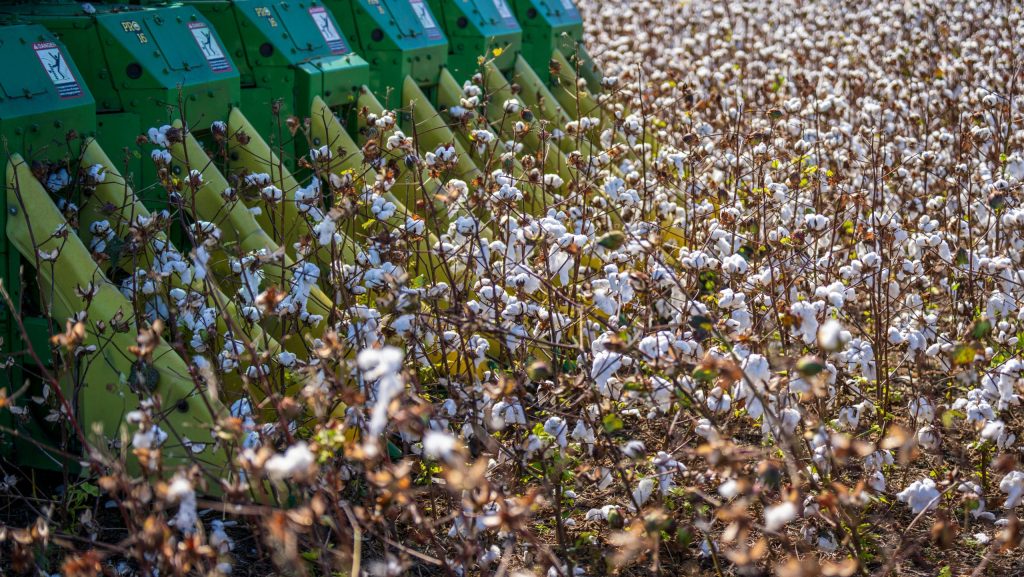
The next bang came from the entry of hybrid cottons. The trials on purebred varieties were soon followed by various intra- and interspecific hybrids. Many hybrids, with short duration and higher yield, ‘better’ industry-standard fiber quality, short maturation time, disease resistance, and wide adaptability, were released. The establishment of the Central Institute for Cotton Research (CICR) and the Cotton Corporation of India (CCI) in the seventies applied a new thrust in cotton breeding and marketing. The nineties saw a radical change with economic liberalization and a gradual rise of the private sector, which emerged as the sole contributor to seed and pesticide research. The Agreement on Textiles and Clothes (ATC) aimed to integrate the textile sector into normal GATT/WTO rules. Despite these changes in policy landscape, yield and profitability were declining and the cost of cultivation was rising, all of which greatly affected the plight of farmers and caused brewing distress in the field.
The new technology of genetically modified cotton or Bt cotton began in 2002. The introduction of the genes of a soil-borne bacterium, Bacillus thuringiensis, into the cotton cultivars instilled resistance to the key lepidopteran insect pests, pink bollworm. It was expected that the ravages could be contained without pesticide application and hence, the cost of cultivation can be reduced in a sustainable manner. The newly engineered seeds were developed, patented, and sold to farmers by private companies, mostly in a monopolistic manner. Thousand Bt hybrid varieties were planted in major cotton cultivating areas nowadays and 90% of the non-GM hybrids and almost all Bt hybrids are derivatives of introduced G. hirsutum. Cultivated cotton nowadays mostly produces superior medium and long staples, whereas short-staple and extra-long staple cotton have been cultivated in very meagre quantities in small isolated pockets.
Owing to Bt cotton, an increase in cotton production was achieved though many commentators have argued the pre-Bt yield rise. The Bt cotton saga has been portrayed as a triumph by government agencies, seed manufacturers, and a large body of the research community. The socio-ecological side of this technological progress is that the cotton farmers became increasingly dependent on external agencies for their seeds that demanded fertilizers or other agrochemicals, irrigation water, etc., and thereby remain embedded in this global commodity chain of cotton. Yields have stagnated and production costs have shot up 2.5–3-fold. In addition, the infestation of Bt cotton by pink bollworm has been widely documented in Maharashtra, Telangana, and Punjab. Thus, the low and unpredictable yield, resistant pests, coupled with the spurious seeds of the hybrid cotton farming system of India, rising costs contributed to further distress of debt-ridden farmers.
Essentially, the underlying ecological process tells a story of severe genetic erosion of cotton from a widely diverse range of varieties from four genetically distinct species to a reliance on a single species with very few cultivars with long staples. Biologically, it predisposes to greater risks emanating from pests and pathogens, and climate vagaries and the cases of pest resistance already rising at an alarming rate in India. The genetic homogeneity as an outcome of long-term social-ecological, technological, and economic change does not concord with the ethos of agricultural sustainability. However, it is hardly accounted for in the popular narratives of cotton pest recurrence, crop failure, and farmers’ distress and ignored perhaps as an historical path dependence. Vulnerability still looms large with climate change restricting the potential to adapt and survive, and thus aggravating the social crisis. Would not importing US cotton rub salt into the wound?
References
Najork K, Gadela S, Nadiminti P, Gosikonda S, Reddy R, Haribabu E, & Keck M. 2021. The Return of Pink Bollworm in India’s Bt Cotton Fields: Livelihood Vulnerabilities of Farming Households in Karimnagar District. Progress in Development Studies, 21(1), 68-85.
Ray A. 2022. Revisiting the Culture of Cotton in the Past: Historical Cultivation Practices, Farmers Decision Making, Intensification of Production. South Asian History, Culture and Archaeology, 2: 2, pp. 229-242.
Ray A. 2025. Hello Technology, Hello Innovation! Do You Have a Mind? Preprints. https://doi.org/10.20944/preprints202507.1918.v1
Ray A. 2025. The erosion of agrobiodiversity of cotton in India: interplay of politics, science, and technology. Science, Technologie, Développement. 2025, vol. 5, n° 1, 84-98 pages, DOI : 10.21494/ISTE.OP.2025.1339
Renshaw J, Lawder D and Kumar M. 2026. US, India unveil interim trade framework, move closer to broad pact. Reuters. https://www.reuters.com/world/india/us-india-release-framework-an-interim-trade-deal-2026-02-06/
The Author
Avik Ray, PhD, is a researcher at the Center for Studies in Ethnobiology, Biodiversity, And sustainability (CEiBa) in India, consultant, and communicator of science. He is interested in environmental history, science-technology studies, political ecology, and anthropology of food gathering and production, and strives to unravel their implication on sustainable agriculture, beekeeping, rural livelihood, food security, and climate change. He has published many articles, reviews in several national and international journals, and contributed to multiple book chapters. He actively writes popular articles cutting across themes, like science, technology, culture, history, and sustainability, in Bengali and English.
FOCUS :