20/08/2026
Sustainable Land Management and Inefficiency in the Adoption of Agricultural Technologies

Babacar NDIAYE
Sustainable land management (SLM) is an essential pillar for ensuring long-term agricultural productivity, food security and resilience to climate change, particularly in sub-Saharan Africa. It brings together a set of practices and technologies aimed at preserving soil fertility, reducing erosion, improving water conservation and minimizing the degradation of natural resources. These practices include, in particular, agroforestry, soil conservation techniques, the use of organic fertilizers, mulching, and anti-erosion structures. In France, the concept of SLM aligns primarily with Conservation Agriculture (CA), which rests on three pillars: minimal soil disturbance, permanent soil cover and crop diversification.
Yet, despite the benefits recognized at the agronomic, environmental and economic levels, the adoption of these technologies by smallholder farmers remains low and often short-lived. Many development projects observe a limited adoption rate. In France, although better supported by the Common Agricultural Policy (CAP) and the “4 per 1000” initiative, CA likewise remains marginal. This inefficiency in the adoption of sustainable land management technologies represents a major paradox for the development of modern agriculture.
Agriculture and Sustainable Wealth According to the Physiocrats
In the mid-eighteenth century, the Physiocrats regarded agriculture as the sole foundation of sustainable wealth. Led by François Quesnay (1694–1774), they represent the perspective closest to a “sustainable” conception of agriculture among classical thinkers. On the one hand, they hold that agriculture is the only productive activity, since it generates a surplus thanks to the bounty of nature. Indeed, Quesnay’s Tableau économique (1758) systematically represents the circulation of wealth: farmers, regarded as the productive class, generate the surplus that sustains landowners as well as artisans (the “sterile” class). This approach highlights an underlying sustainable management: in the absence of care given to the land, the net product tends to decline, thereby jeopardizing long-term prosperity. This is why the Physiocrats advocate an intensive agriculture that nevertheless remains in harmony with natural cycles, one in which nature “collaborates” freely with humankind.
Agriculture in the Age of Modernization
At present, modern agriculture faces significant challenges, among which are the adoption of innovations, insufficient crop productivity, aggravated by the inefficiency of agricultural technologies as well as by the persistence of traditional practices that harm natural resources.
In France, as in most developed countries, the State promotes precision agriculture and the integration of digital technology. This involves using, on the one hand, modern tools (drones, sensors, GPS/GNSS for automatic guidance, satellites, management software, robots, and so on) and, on the other hand, specialized software accessed through the internet. This situation is observed worldwide, except in sub-Saharan Africa, where research and development initiatives have not yet led to concrete and sustainable solutions that are widely accepted. Despite the agronomic potential of several innovations, such as improved seeds, organic fertilization, water and soil conservation techniques, as well as crop rotation, the adoption rate of these practices remains insufficient. Various factors, such as soil degradation, an insufficient level of mechanization and the intensification of climatic hazards, contribute to the low agricultural productivity observed in this region.
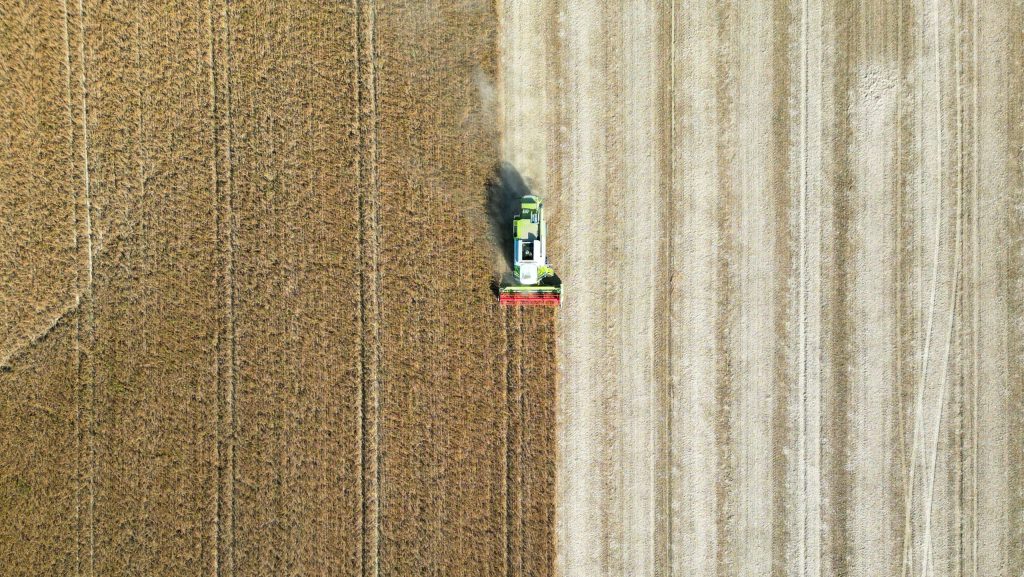
Photo : Vladimir Srajber
Sustainable Land Management Practices
The adoption of sustainable land management practices represents a promising approach to addressing these inefficiencies, by strengthening the resilience of agricultural systems and improving productivity in an ecological manner. This approach encompasses methods aimed at optimizing the use of natural resources and reducing environmental impact, while fostering sustainable yields over the long term. These practices include conservation agriculture, agroecology, organic farming as well as climate-smart agriculture, all developed with the aim of increasing yields while reducing harmful environmental impacts. Their objective is an ecological intensification based on the optimal use of regulating ecosystem functions, which requires complex, knowledge-rich adaptations tailored to each territory. The transition toward such practices requires a fundamental transformation of agricultural systems in order to redefine the objectives of production and consumption, moving beyond the sole aim of increasing productivity. It is within this framework that the concept of sustainable intensification emerges as an essential strategy, aiming to reconcile the growth of agricultural productivity with the preservation of natural resources and environmental sustainability.
Directions for Agricultural Policies
Investment priorities are oriented at two levels. On the one hand, there is the optimization of biogeochemical cycles, that is, the mastery of the processes of circulation and recycling of essential chemical elements. These cycles maintain the balance of ecosystems by making nutrients available to humans, plants, animals and micro-organisms.
On the other hand, there is the reduction of the need for limiting resources, both natural (the physical availability of elements) and anthropogenic (the disruption of cycles by human activity, especially since agricultural modernization). This holistic approach, which also values local know-how and non-wage social relations, is essential for building agricultural systems that are resilient to climatic, food and ecosystem crises. It makes it possible to reduce dependence on external inputs while improving the autonomy of producers, thereby forming part of an approach to resilience in the face of climatic hazards.
Agroecology, as a systemic approach, integrates social, economic and political dimensions in order to design sustainable food systems, underscoring the importance of agricultural diversification at the scale of the field and the landscape. This diversification, including polyculture and intercropping, strengthens the resilience of farms by improving food security and the conservation of biodiversity, while reducing dependence on chemical inputs. This approach is crucial not only for the conservation of biodiversity and the mitigation of climate change, but also for the transformation of food systems at all scales, an imperative that requires urgent recognition by scientists and policymakers.
In conclusion, in order to fully realize the potential of agroecological transitions, it is essential that agricultural extension services assume a facilitating role in the processes of innovation and negotiation. This requires constant support as well as appropriate resources for these agents, so that they are able to effectively guide farmers in adopting varied and resilient practices. This effort also contributes to the preservation of natural resources and to the improvement of food resilience in the face of the challenges posed by climate change.
The Author
Babacar NDIAYE is a professor and researcher in economics at Amadou Mahtar Mbow University in Dakar. An expert in industrial economics, the economics of knowledge, and the economics of innovation, he is a member of the Innovation Research Network on Innovation (RNI) and founded the Sub-Saharan Research Network on Innovation (RNI2S).
FOCUS :