26/06/2026
Water On Our Blue Planet Is Under Pressure: How Can We Save This Common, Circulating, Vital Resource?

Jean-Marc TOUZARD
Olivier BARRETEAU
Frances CLEAVER
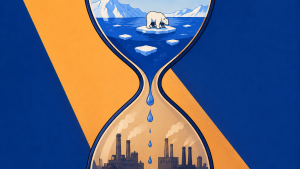
The name ‘Blue Planet’ was given to Earth following the first views of it from space, reflecting the exceptional presence of water on its surface, a vital resource for ecosystems and human societies. But the state of this resource, particularly freshwater, has taken a dramatic turn, described as a ‘global water Bankruptcy’ in a report recently published by the United Nations University (Madani, 2026). Over the last fifty years, the majority of the world’s large lakes have seen their surface area decrease, a third of rivers have suffered significant reductions in flow, 35% of wetlands have disappeared, glacier mass has decreased by nearly 30%, almost 70% of the world’s aquifers are declining, and in many regions the quality of available water is deteriorating due to pollution or salinization. The consequences are catastrophic for biodiversity, with, for example, a reduction of nearly 75% in aquatic ecosystem populations. They are also catastrophic for human populations: around 2.2 billion people still lack access to safe drinking water, nearly 4 billion experience water shortages for at least one month each year, and conflicts over water are multiplying worldwide, as documented by the Pacific Institute’s Observatory. In France, ‘water battles’ are also in the news, in Poitou over the Sainte-Soline reservoir, and in Brittany over the preservation of catchment areas. How can we explain such rapid degradation of this resource? What solutions and innovations are needed to maintain the habitability of our ‘blue planet’?
Growing Human Pressure
At the root of this pressure on the planet’s water resources lies an economic development model that fails to ensure the replenishment of one of its vital resources. On the one hand, demographic, economic and urban growth leads to an increase in demand for fresh water, for domestic, industrial, agricultural, energy and even recreational uses. To address this, the mainstream focus is on building new infrastructure, equipment and distribution networks to guarantee a sufficient supply for unchanged uses. These choices lead to a lack of consideration for water uses, their location and their interactions within a circular economy. Furthermore, climate change, a consequence of this same development model, exacerbates the pressure on water resources (Ollat, Touzard, 2024). Rising temperatures lead to increased water consumption by plants, animals and humans, as well as greater evaporation from soils and surface waters, and higher demands from industrial and energy-related activities. Changes in the spatial and temporal distribution of rainfall, rising sea levels and the increase in extreme weather events are rising risks to human activities, altering water circulation within regions and thus its distribution, and ultimately its availability where current uses require it. These changes reinforce each other and exacerbate tensions in access to water, generating significant geographical and social inequalities worldwide.
Innovating For a Common, Circulating, And Cross-Sectoral Good
This historical context of major tensions in access to water resources also stimulates the search for solutions and innovations. Although the issue is global and calls into question the habitability of our planet, a better alignment of water use with local contexts and the real needs of communities could reduce the pressure. Water management is a specific area of innovation: water must first be regarded as a common good, access to which is both a “fundamental right indispensable to the full enjoyment of the right to life and all human rights” (United Nations, 2010), and subject to competition between its various uses. As a common good, water is an area of innovation where technical and organisational solutions are closely linked to institutional choices, political issues (prioritisation between sectors and uses) and social justice. Water is also a resource that circulates across the planet in various states (gaseous, liquid, or even solid), in different environments (surface, subsurface, atmosphere) and with varying characteristics in terms of its quality and accessibility to populations. This circulation creates interdependencies between uses that shape the effectiveness of innovations. For example, an innovation in wastewater reuse may promote the development of a circular economy, with downstream innovations in irrigation and upstream innovations in domestic uses. It may also contribute to the drying up of watercourses if it merely increases consumption, in the absence of appropriate rules resulting from necessary consultation. This water cycle has a territorial dimension, as innovations must take into account the local characteristics of a hydrosystem, as well as the economic, political and cultural specificities of each territory. Finally, the availability and quality of water also impact ecosystems and thus the conservation of biodiversity. Innovation in water management is multi-sectoral, driven not only by water policies but also by agricultural, energy, health, industrial and environmental policies.
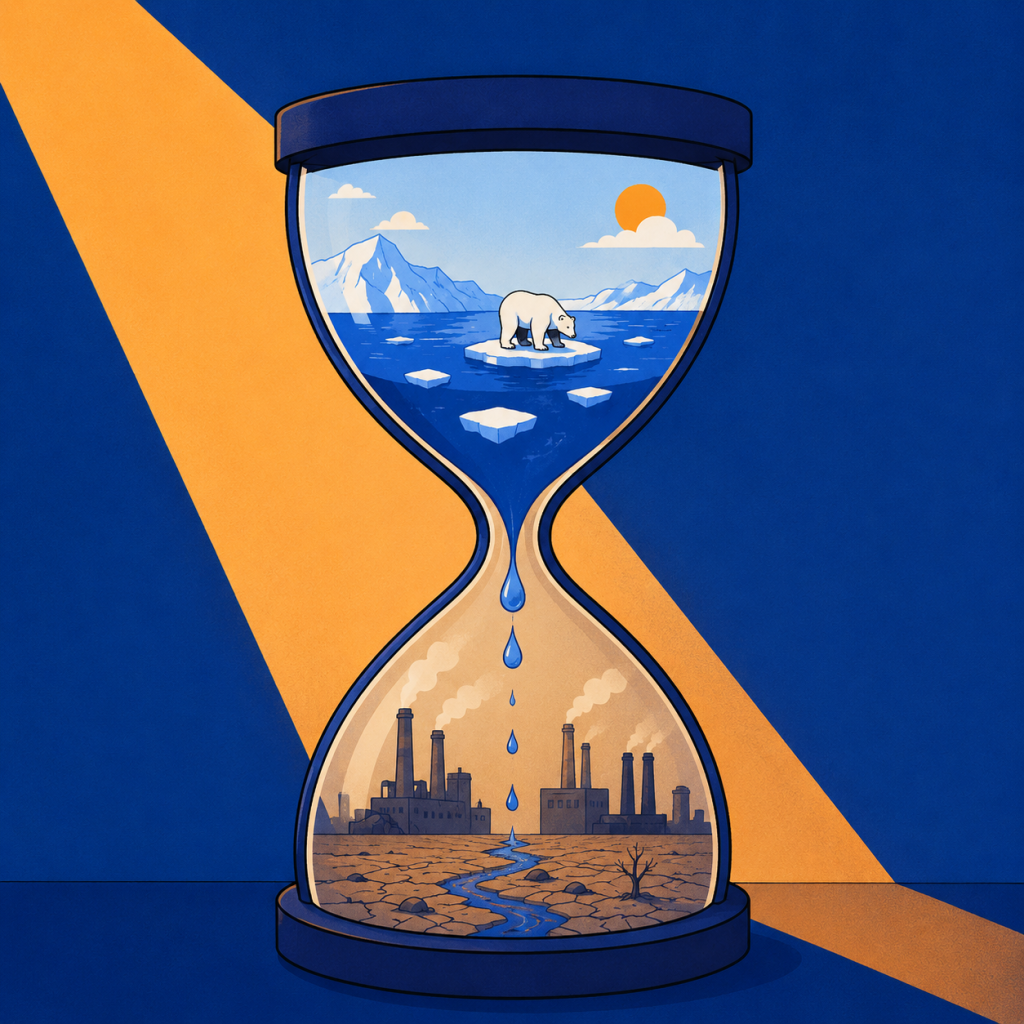
Illustration : CR
Governing Water Through Knowledge, Creativity and Cooperation at Different Scales
Over the past few decades, one of the key lessons from social science research into water management has been the need to critically examine the overly technical and managerial approach that prevailed in many 20th-century hydraulic engineering and urban water management projects. By exploring the diversity of practices, rules and institutional arrangements surrounding water across the globe, this research has highlighted the limitations of ‘top-down’ management approaches, as well as certain models aimed at promoting community-based management, particularly in the Global South (Cleaver, F., Whaley, 2018). Technical and organizational innovation remains, of course, key to improving resource monitoring, planning and pricing, promoting water-efficient uses and the preservation of ecosystems and water cycles. The involvement of users, local communities and their knowledge remains, more than ever, essential to ensuring sustainable water management, making adjustments to address shortcomings, preserving access to water, maintaining infrastructure and managing distribution. The political challenge in many countries is to build multi-level governance capable of innovation, to better take into account cross-sectoral relationships and democratic issues, or even crisis situations. Beyond technological, organizational and institutional aspects, innovations in water management do indeed have a threefold social dimension: they must address the challenge of water equity, implement methods that promote participation and cooperation, and align to the perceptions and values that underpin society’s relationship with water, calling for a new ‘social contract’ on water (Barreteau, Bouleau, 2023) that could shift behaviors towards greater collective sobriety.
Mobilising Research and Society to Save Our Blue Planet
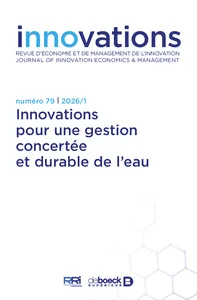
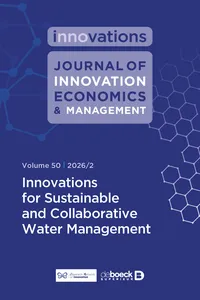
There is indeed an urgent need for everyone to mobilize. International reports and the upcoming World Water Summits in 2026 and 2028 serve as reminders of this. A number of recent publications attest to the commitment of scientists (Servat, 2025; Bouarfa et al., 2025), as do the latest issues of the journals Innovations and Journal of Innovation Economics & Management, which call for greater collaboration between scientists working on water (water studies) and those who study and support innovation (innovation studies).
Beyond international bodies and scientists, policymakers, citizens and users are also expressing this urgency to act, even if short-term economic constraints, wars or identity-based withdrawal seem today to be tragically pushing back the possibility of action. It must be reiterated now more than ever: a major strategic reassessment must be undertaken to save the water of our blue planet and the life for which it is a prerequisite! In this sense, the recommendations to policymakers in the United Nations University report (Madani 2026) suggest an approach to ‘redefine the challenge of water governance in a post-crisis era’: i) recognize the limits and losses of aquatic ecosystems; ii) prioritize the protection of wetlands, aquifers, ecosystems, soils, glaciers, etc.; iii) moderate and reallocate water demand and uses according to the degraded capacities of systems, while ensuring basic human needs and essential services; iv) protect the most vulnerable populations and more explicitly integrate issues of justice and equity; v) transform the most water-intensive sectors, particularly agriculture, which must develop agroecological and more water-efficient practices; vi) diversify economies and decouple growth from water use; vii) integrate issues of climate change mitigation and adaptation; viii) establish institutions to ensure adaptive and responsible management at the local, national and international levels.
Références
Barreteau, O., Bouleau, G. (2023), Eau: qui perd, qui gagne?, Natures Sciences Sociétés, 31(1), 1-2.
Bouarfa, S., Montginoul, M., Pelte, T., Sauquet, E. (2025), Comment partager l’eau en France à l’ère de l’anthropocène ?, Versailles, éditions Quae.
Cleaver, F., Whaley, L. (2018), Understanding Process, Power, and Meaning in Adaptive Governance, Ecology and Society, 23(2), 49.
Madani, K. (2026), Global Water Bankruptcy: Living Beyond Our Hydrological Means in the Post-Crisis Era, United Nations University Institute for Water, Environment and Health, Richmond Hill, Canada.
Ollat, N., Touzard, J.-M. (Eds) (2024), Vigne, vin et changement climatique, Versailles : éditions QUAE, 280 p. Quae-open
Servat, E. (2025), Le grand défi de l’eau, Editions Harper Collins.
The Authors
Olivier BARRETEAU is an INRAE researcher in Water Sciences at the UMR G-eau in Montpellier and Deputy Director of the UNESCO ICIReWaRD Centre. His research focuses on adaptive and collaborative water and land management in the context of global change. He promotes interdisciplinary approaches combining participatory modelling and social simulation to foster long-term collaboration between water users, decision-makers and researchers.
Frances CLEAVER is Professor Emeritus at Lancaster University (UK). Her research, informed by political ecology, focuses on the governance of natural resources, particularly of water in sub-Saharan Africa. She emphasizes the role of institutions in shaping social and power dynamics at different scales, whilst influencing access to resources—an analysis she has promoted through the concept of ‘institutional bricolage’.
Jean-Marc TOUZARD is an economist and INRAE Research Director at the ‘Innovation’ UMR in Montpellier. He studies the innovation processes transforming agricultural and food systems in the face of food security challenges and the need to adapt to climate change. In particular, he coordinated the LACCAVE program with Nathalie Ollat on the adaptation of French vineyards to climate change.
FOCUS :