
21/09/2026
When urgency becomes permanent: task forces as new organizational adaptation capabilities

Loïck COUDRE

Magdalena POTZ
How do organizations adapt when crises cease to be exceptional and become permanent?
For several years, companies have been operating in an environment marked by a succession of disruptions: pandemics, geopolitical tensions, shortages of raw materials, recruitment difficulties, and the acceleration of environmental transitions. In this context, mechanisms designed to manage emergencies sometimes tend to become permanently embedded within organizations.
This is particularly the case with task forces. Initially conceived as temporary structures designed to solve a specific problem, they now occupy an increasingly important place in certain companies. Based on a study conducted in the aerospace supply chain, we sought to understand how these emergency structures contribute to the development of new organizational adaptation capabilities.
An industry facing permanent turbulence
For several years, the aerospace supply chain has been subject to particularly strong pressures. The Covid-19 pandemic profoundly disrupted global supply chains. Companies had to cope with production stoppages, logistical difficulties, and shortages of essential components.
Even as air traffic gradually returned to its pre-crisis level, new challenges emerged. Aircraft manufacturers increased their production rates while some suppliers were still struggling to recover their industrial capabilities. Added to this were tensions regarding raw materials, recruitment difficulties, and growing pressure to accelerate the sector’s ecological transition.
In such a context, organizations can no longer rely solely on their usual routines. They must be able to quickly detect problems, coordinate different actors, and implement innovative solutions. To achieve this, they must develop adaptation capabilities that enable them to react, learn, and transform themselves when faced with unprecedented situations.
Dynamic capabilities: learning to adapt
Dynamic capabilities correspond to an organization’s ability to adapt its resources, competencies, and modes of operation when its environment evolves rapidly. Unlike operational capabilities, which enable the efficient execution of daily activities, dynamic capabilities make it possible to transform the organization itself.
In the aerospace industry, these capabilities have become essential. Companies must continuously adjust their processes, develop new forms of cooperation, and find solutions to unprecedented situations.
However, these capabilities do not develop spontaneously. They rely on more concrete elements that researchers refer to as microfoundations: practices, interactions, routines, and coordination mechanisms that gradually enable the organization to learn and adapt. It is from this perspective that task forces appear particularly interesting.
The task force: a crisis management tool that has become essential
In the aerospace sector, a task force is generally established when a critical problem threatens the proper functioning of the supply chain or production. It rapidly brings together different actors around a common objective: resolving a situation considered a priority.
These groups often include representatives from purchasing, supply management, quality, production, logistics, and suppliers. Their mission consists of sharing information, assessing risks, identifying solutions, and coordinating their implementation within very short timeframes. When an essential part risk becoming unavailable, when a supplier encounters difficulties, or when a production line stoppage becomes possible, the task force enables the rapid mobilization of the necessary expertise to prevent the situation from deteriorating. At first glance, it appears to be a traditional crisis management tool. Yet our observations show that its role goes far beyond this initial function.
Spaces where organizations learn to adapt
Our observations show that task forces do not merely solve isolated problems. They also create favorable conditions for organizational adaptation. Three mechanisms appear particularly important. One of the main findings of our research is that task forces contribute to the development of several microfoundations of dynamic capabilities.
The first concerns responsiveness. While some coordination meetings were previously organized on an occasional basis, task forces have introduced much more intensive rhythms of interaction. Depending on the severity of the situation, actors may meet several times a week, or even several times a day. This frequency promotes faster problem detection and accelerated decision-making.
The second microfoundation is related to collaboration. Task forces bring together actors who are not always accustomed to working together so intensively. They foster exchanges across functions, across companies, and sometimes even across different levels of the supply chain. This proximity facilitates the circulation of information and improves mutual understanding of the constraints faced by each participant.
A third dimension concerns collective learning. Each critical situation forces participants to experiment, improvise, and design new solutions. Actors gradually learn how to manage uncertainty, prioritize actions, and rapidly mobilize available resources.
Finally, task forces develop a form of strategic flexibility. They enable organizations to consider several scenarios simultaneously, quickly adapt their decisions, and temporarily modify certain practices in order to preserve operational continuity.
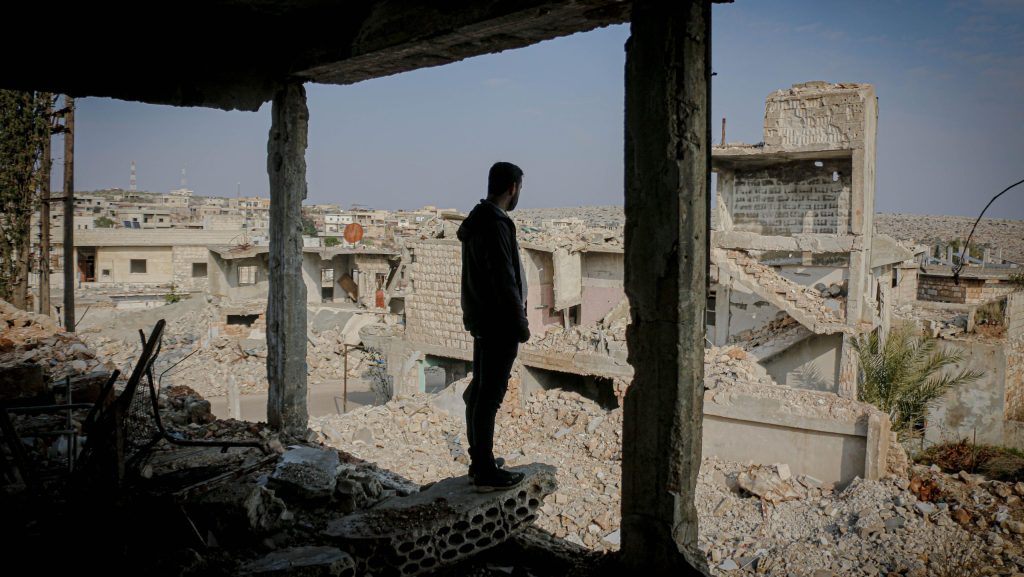
Photo : Ahmed akacha
The task force paradox
A particularly interesting finding of our study lies in an apparent paradox. By definition, a task force is a temporary structure. It is created to respond to a specific problem and is expected to disappear once its mission has been accomplished. Yet, in the companies studied, some task forces have existed for several years.
This observation reveals a deeper evolution of contemporary organizational forms. Task forces were created to respond to disruptions considered exceptional. But when crises succeed one another and uncertainty becomes enduring, these mechanisms ultimately become integrated into the ordinary functioning of organizations.
In other words, companies are no longer simply seeking to get through a crisis before returning to normal. They are gradually developing mechanisms that enable them to function despite instability. Urgency thus ceases to be an exceptional event and becomes a lasting condition of collective action.
The succession of crises and disruptions has gradually transformed the role of task forces. What was intended to be an exceptional mechanism has become a relatively permanent mode of operation. Task forces certainly continue to intervene in specific problems, but they now participate more broadly in the day-to-day governance of certain critical activities.
This evolution shows that the boundary between temporary and permanent organization is sometimes more blurred than it may appear. In a persistently turbulent environment, mechanisms designed to manage emergencies can become essential mechanisms of adaptation.
Rethinking task forces in an uncertain world
Task forces now appear as much more than simple crisis units. They constitute spaces where organizations learn to cooperate differently, experiment with new solutions, and develop their capacity for adaptation.
Through the interactions they foster, the knowledge they mobilize, and the solutions they make it possible to experiment with, task forces gradually contribute to strengthening organizations’ ability to cope with uncertainty.
Although our study focuses on the aerospace industry, its lessons extend far beyond this sector. In many public and private organizations, mechanisms initially designed to respond to an emergency tend to become permanent. Project teams, crisis units, and cross-functional working groups sometimes become enduring components of organizational functioning.
This evolution invites us to rethink the boundaries between temporary and permanent structures, as well as the organizational forms needed to operate in a world marked by uncertainty.
In an aerospace industry facing major technological, environmental, and geopolitical transformations, this adaptive capacity undoubtedly constitutes an essential advantage. Task forces thus illustrate a paradox that has become central in many organizations: how can a structure remain temporary when urgency itself is no longer temporary?
The Authors
Loïck COUDRE is Assistant Professor of Management Sciences at Eductive-Skolae Lyon, affiliated with the GReMOG research laboratory and an associate member of the CRET-LOG laboratory. His research focuses on innovation in industrial organizations, particularly in the fields of supply chain management, purchasing, and air transport. He is especially interested in dynamic capabilities and the transformations of companies facing the challenges of decarbonization and industrial transition.
Magdalena POTZ is Assistant Professor of Management Sciences at Mines Saint-Étienne, Institut Henri Fayol, and affiliated with the COACTIS research laboratory. Her research focuses on organizational transformations in response to major contemporary challenges, particularly in the fields of public management, collaborative public action, and organizational adaptation capabilities in contexts of uncertainty.
FOCUS :
Vol 11 - Modèles et méthodes d’innovation (II) Ingénierie d’applications technologiques