07/09/2026
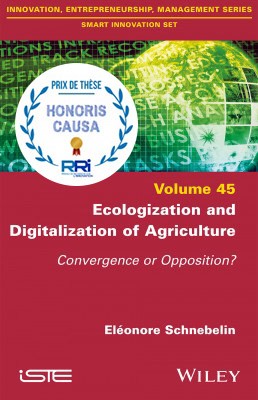
Ecologization and Digitalization of Agriculture: Convergence or Opposition?
Eléonore SCHNEBELIN
In recent years, agricultural crises have occurred regularly and sometimes with great intensity: production losses linked to climate change (droughts, floods, etc.) are becoming increasingly frequent (1), along with health crises in livestock farming and social movements by farmers demanding, in particular, better compensation for their work (2). In the face of these crises, the need to transform agricultural models is clear. However, debates and controversies exist regarding how to implement the necessary change, relating to various paradigms. Some propose optimizing agricultural practices and improving their efficiency. Others propose a more fundamental redesign of agri-food systems to facilitate their biological regulation and resilience. Part of these debates focuses on the role of new technologies, particularly digital technologies, in that ecologization of agriculture. A variety of stakeholders highlight the opportunities offered by digital technology for more environmentally friendly agriculture. Microsoft proposes “data-driven agriculture” to “increase global food production by 2050,” “boost farm productivity,” and “reduce costs” (3). The FAO sees the development of digital technology as a solution to the socio-economic challenges facing rural communities (4). In France, the Agriculture Innovation 2025 report proposed supporting the development of digital technologies, which would enable greater efficiency and thus reduce pollution linked to agricultural practices while improving the sector’s competitiveness (5).
Thus, sensors, robots, drones, digital decision-support tools, connected weather stations, farm management software, and collaborative platforms are grouped under the concept of “Digital Agriculture”, which is framed as a techno-scientific promise heralding the advent of an agriculture that produces more and better; a competitive Agtech sector; more collaborative agriculture and more autonomous farmers (6). The promotion of this promise by a diverse range of stakeholders facilitates the attraction of resources. Governments, regions, international organizations, companies, and foundations are investing in the research and development of digital solutions. For instance, the European Commission reportedly allocated €192 million between 2014 and 2020 to research on and for the development of digital technology in agriculture. Governments around the world are supporting startups in the sector as they grow by providing support through incubators, funding their R&D projects, and investing during their early stages of development (7). In France, the France 2030 Plan proposes a “revolution in the understanding of living organisms” in agriculture through robotics, digital technology, genetics, and biocontrol, with funding of 2.3 billion euros. Private funding in this field is growing exponentially (8). Research is organized around an increasing number of projects in the field, such as the DigitAg convergence institute in France, the Europe-wide Data4Food project, and the Digiscape Future Science Platform in Australia.
Critical voices are gradually emerging and calling into question this “techno-scientific solutionism”. A key aspect of this critique is the ecological impact of these technologies. This impact may be limited, as these technologies would only yield marginal gains in terms of reducing resource use, but also due to the environmental impact of manufacturing and using these technologies. Another dimension of the controversy concerns the agricultural models and trajectories that digital technology supports more broadly. The development of these technologies is sometimes described as a continuation of the trajectory based on the mechanization, simplification, and homogenization of production systems. It would create new dependencies and power relations that could lock-in conventional agricultural models.
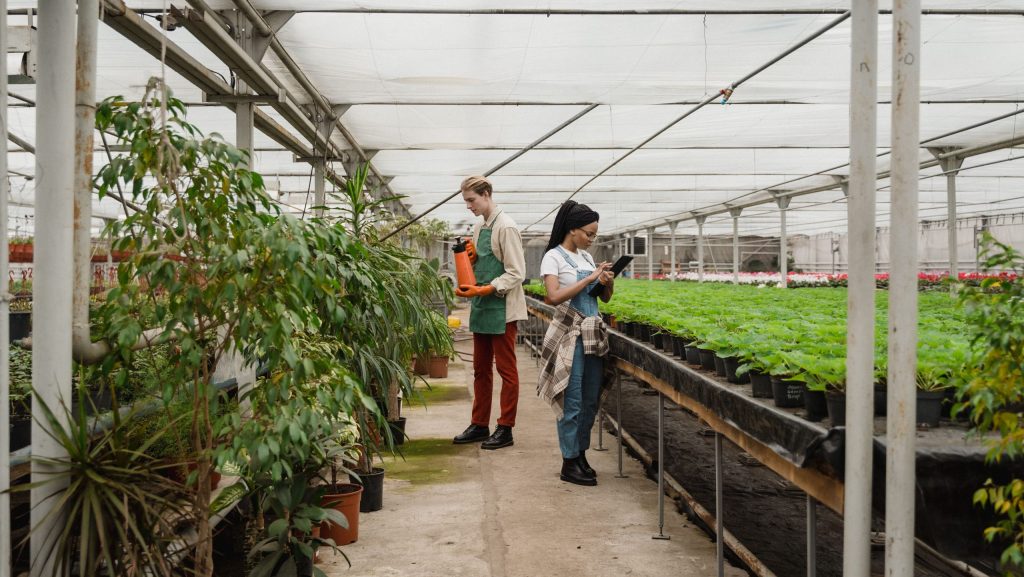
Photo : Tima Miroshnichenko
The book Ecologization and Digitalization of Agriculture: Convergence or Opposition? aims to contribute to this debate by moving beyond rhetoric and promises to examine the representations, uses, and transformations of practices brought about by the development of digital technology in the agricultural sector.
The first part presents an empirical and scientific overview of the issue of digital technology in agriculture. After a historical detour examining the evolution of agriculture since the end of World War II, this section demonstrates that, far from being limited to the introduction of a new tool into a system, the development of digital technology is a multidimensional transformation: transformations of actors, institutions, public policies, and practices on farms. These transformations raise a range of controversies regarding whether or not these changes accompany the ecological transformation of the agricultural sector. A review of the scientific literature on the subject highlights the various components that must be taken into account to analyze these transformations in all their complexity. It thus calls for a systemic study of these phenomena, incorporating multiple scales of analysis and accounting for the internal heterogeneity within the agricultural sector, which is too often overlooked.
The second part consists of an analysis of the links between digital development and ecological agriculture, based on the perceptions, practices, and projects of actors on the ground. This part examines the ongoing digitalization of the agricultural sector in its various dimensions: reflections by agricultural organizations, implementation of public policies, collaborations between digital and agricultural actors, uses of digital technology on farms, and experiments within cooperatives. It thus illustrates the positions of actors in these transformations and their practices, presenting innovation not as an exogenous process that disrupts the agricultural sector, but rather as a complex, multidimensional process that shapes and is shaped by the actors. An analysis of the perceptions and implications of organizations within the agricultural innovation system reveals that, depending on the type of ecological agriculture promoted by the actors, their expectations, their perceptions of risks, and their digital strategies differ. This diversity is largely overlooked by digital actors, suggesting a risk that digital technologies may be developed solely according to the expectations and needs of the dominant agricultural paradigm. A study on farmers’ uses and perceptions highlights the diversity of digital usage profiles. The most significant uses of digital technology are primarily found on more industrialized farms. Ecological practices associated with digital technology are largely limited to practices of justification or optimization rather than deeper ecological transformation. However, digital tools offer capabilities for accessing and exchanging knowledge that can provide a valuable complement to more traditional knowledge-sharing spaces such as farmers’ associations. Cooperatives, acting as intermediaries between production and downstream sectors, and between producers and other organizations within the agricultural innovation system, strive to articulate a set of standards: environmental, regulatory, commercial, and so on. Digital technology is thus sometimes used to manage the growing complexity of supply chains that are diversifying and becoming more segmented, but it is primarily driven by downstream requirements rather than ecological concerns.
The final section of the book highlights and brings together all the empirical elements presented throughout to discuss the links between digital technology and ecological agriculture. It demonstrates that the development of digital technology in agriculture depends on the diversity of models and paradigms, interacting with a socioeconomic system that proposes, encourages, or even imposes a technological trajectory. The digital trajectory in agriculture reveals several forms of opposition to a strong ecological agriculture, whether in terms of technology, objectives, reasoning, temporal dynamics, or political and social issues. Hybrid approaches, however, appear possible for industrialized ecological agriculture, or through a more comprehensive reimagining of digital technology, by rethinking its technical, economic, and political models.
References
- Hultgren, A., Carleton, T., Delgado, M., Gergel, D.R., Greenstone, M., Houser, T., Hsiang, S., Jina, A., Kopp, R.E., Malevich, S.B., McCusker, K.E., Mayer, T., Nath, I., Rising, J., Rode, A., Yuan, J., 2025. Impacts of climate change on global agriculture accounting for adaptation. Nature 642, 644–652. https://doi.org/10.1038/s41586-025-09085-w
- Läpple, D., Thoyer, S., Van den Broeck, G., Lécole, P., Sok, J., de Mey, Y., 2026. Farmers’ Voices in European Protests: Diverse Complaints, Emotional Tones, and Policy Responses. Food Policy 138, 102999.
- Microsoft, 2024. FarmBeats: AI, Edge & IoT for Agriculture. Microsoft Research. URL https://www.microsoft.com/en-us/research/project/farmbeats-iot-agriculture/
- FAO, ITU, 2016. E-Agriculture Strategy Guide. Food and Agriculture Organization of the United Nations and International Telecommunication Union, Bangkok.
- Bournigal, J.-M., Houllier, F., Lecouvey, P., Pringuet, P., 2015. Agriculture Innovation 2025 : 30 projets pour une agriculture compétitive & respectueuse de l’environnement.
- Martin, T., Schnebelin, E., 2023. Agriculture numérique : une promesse au service d’un nouvel esprit du productivisme. Nat. Sci. Soc. 31, 281–298. https://doi.org/10.1051/nss/2023046
- Klerkx, L., Villalobos, P., 2024. Are AgriFoodTech start-ups the new drivers of food systems transformation? An overview of the state of the art and a research agenda. Global Food Security 40, 100726. https://doi.org/10.1016/j.gfs.2023.100726
- AgFunder, 2021. AgFunder AgriFoodTech Investment Report.
The Author
Eléonore SCHNEBELIN is an agricultural engineer with a Ph.D. in economics and a researcher at the AGIR (UMR) at INRAE, France. She studies the interrelated transformations of technologies, practices, organizations, knowledge, and institutions in the agricultural sector and its supply chains.
FOCUS :
Agriculture écologique et technologies numériques. Convergence ou contre-sens ?