22/05/2026
How Artificial Intelligence Is Reshaping Innovation Ecosystems?


Laurent ADATTO

Camille AOUINAÏT

Son Thi Kim LE

Michelle MONGO-DESAGE
The rapid and widespread rise of artificial intelligence (AI) is profoundly transforming contemporary innovation ecosystems. These changes go far beyond improvements in technical performance: AI is reshaping organizational structures, redefining relationships between actors, and introducing new governance challenges. New intermediaries are emerging, certain skills are becoming essential, and value chains are reorganizing around platforms and data flows. Understanding these dynamics is crucial for anticipating how organizations, regions, and institutions can adapt to this systemic shift.
AI is now embedded across a wide range of sectors, including manufacturing, healthcare, education, defense, logistics, agriculture, finance, and public administration. This cross-sectoral diffusion is transforming how knowledge is produced and how collaboration takes place. Innovation ecosystems are becoming more open, more interconnected, and increasingly dependent on intangible resources such as data, digital infrastructures, and specialized expertise.
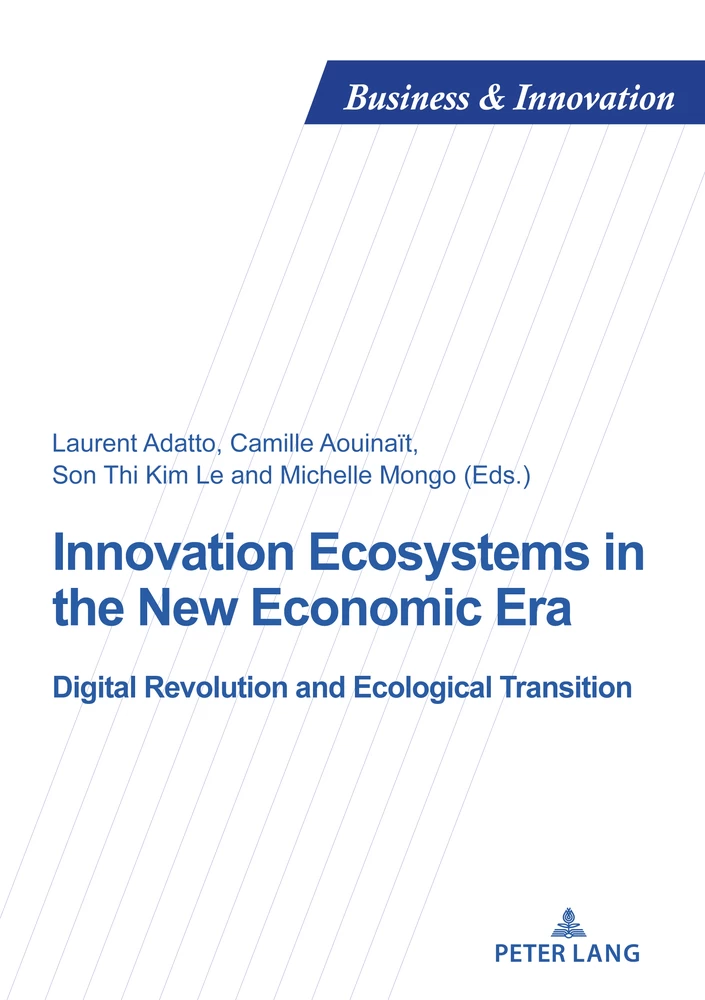
This text draws on insights from our work on the evolution of innovation ecosystems in the face of economic, social, and technological transformations. It highlights the central role these ecosystems play in generating, adopting, and diffusing innovation, and examines several major shifts: changing actor roles, reconfigured value chains, the rise of new intermediaries, geographic redistribution of innovation, and emerging governance challenges.
Shifting Roles Within Innovation Ecosystems
Traditional innovation ecosystems brought together firms, universities, research centers, investors, and public authorities. With AI, this configuration is becoming more complex.
The quantity, quality, and accessibility of data now determine the effectiveness of AI models. Companies that control these strategic resources as digital platforms, telecom operators, retailers, and manufacturers of connected devices, are becoming dominant players. They can impose technological standards and redefine market entry conditions.
Developers of AI models like specialized startups, private labs, and public research institutions play an increasingly influential role. Their algorithms form the technical foundations upon which other actors build products and services. Their importance in the market is growing due to the impact of their innovations, which form the technical foundations upon which other actors build their own products and services.
End-users as industrial firms, public services, SMEs, and consumers are no longer passive recipients. Their usage patterns, feedback, and constraints directly influence development priorities. In some cases, user communities themselves steer innovation directions.
This transformation of roles is also accompanied by an evolution in the skills sought within innovation ecosystems. Hybrid profiles combining technical expertise, data analysis capabilities, and an understanding of organizational challenges are becoming particularly in demand. Universities and training institutions therefore play a crucial role in structuring these new labor markets by developing interdisciplinary programs that integrate computer science, management, economics, and the social sciences.
Reconfiguring Innovation Value Chains
The integration of AI is disrupting traditional value chains, making them more circular, multidirectional, and dependent on data flows. Three major trends stand out:
- The rise of platforms
Digital platforms are becoming key nodes for value creation and capture. They orchestrate interactions between developers, users, data providers, and integrators, turning innovation into a continuous and iterative process.
- Fragmentation of innovation activities
Building AI systems involves multiple specialized steps (data collection, annotation, training, optimization, and integration), each of which can be carried out by different actors. This fragmentation increases interdependence and multiplies coordination challenges.
- Accelerated innovation cycles
Automation and pre‑trained models shorten experimentation, prototyping, and deployment cycles. Organizations must now adapt to overlapping technological waves and faster competitive dynamics.
The Emergence of New Innovation Intermediaries
The expansion of AI is giving rise to a new generation of technical, economic, and institutional intermediaries. These include: (i) providers of annotated data, essential for supervised learning (specialized firms, collaborative platforms, public organizations); (ii) algorithm auditors and certifiers, responsible for assessing ethical compliance, robustness, explainability, and bias in AI systems; (iii) AI solution integrators, who support companies in the technical and organizational implementation of models; (iv) manufacturers of specialized chips, indispensable for the fast, large-scale processing of algorithms; and (v) governance mediators, who facilitate coordination among stakeholders, as well as standardization and regulation. These intermediaries occupy a strategic position: they streamline interactions and help ensure trust in AI systems.
Beyond their technical role, these intermediaries also contribute to the institutional structuring of innovation ecosystems. They help disseminate norms, best practices, and standards that facilitate cooperation among actors. In some cases, they act as catalysts for innovation by connecting organizations that would not spontaneously collaborate.
Geographic Reconfigurations and Redistribution of Innovation Hubs
The geography of innovation is undergoing a dual movement: concentration and dispersion. On the one hand, centers of excellence are strengthening in regions with strong R&D investment capacities, advanced digital ecosystems, and a high density of AI skills. These hubs are capturing an increasing share of funding, infrastructure, and talent.
On the other hand, AI is enabling the decentralization of certain activities such as data annotation, remote training, and the development of specialized models. Regions that were long on the margins of technological innovation are becoming important players in intermediate segments of the value chain.
Countries and regions are thus positioning themselves according to their comparative advantages: cloud infrastructure, engineering capabilities, data availability, regulatory stability, quality of education, and the maturity of industrial networks.

Photo : Markus Winkler
New Governance and Regulatory Challenges
Beyond technological issues, AI is embedded in major contemporary societal transitions, particularly the ecological transition and the transformation of production systems. Innovation ecosystems must therefore reconcile economic performance, environmental sustainability, and social acceptability in light of the paradoxes inherent in the use of AI.
The rapid expansion of AI raises new governance issues. The complexity of infrastructures, the scale of data involved, and the opacity of some algorithms create challenges around transparency, accountability, and oversight. Public authorities are responding with regulatory frameworks, ethical guidelines, and certification mechanisms. Meanwhile, companies are adopting internal governance tools such as algorithmic audits and risk management processes. Effective governance also depends on coordination between public and private actors. Universities, research centers, and intermediary organizations play a key role in promoting norms that support responsible AI development.
At The Core of AI And Innovation Dynamics: The Strategic Role of Semiconductors
No analysis of AI‑driven innovation ecosystems is complete without considering the technological substrate that enables them: the semiconductor industry. These electronic chips are the true engines of AI capabilities and a major source of power for firms, and even more so for states. Many leading chip designers and manufacturing ecosystems are located in Southeast Asia, particularly Taiwan. As a result, semiconductor production carries significant geopolitical implications, especially regarding Taiwan’s security. Massive national and regional investment plans, most notably in the United States, China, and Europe, reflect the strategic importance of this sector. Falling behind in this race could mean losing long‑term influence over the economic, industrial, technological, and geopolitical future.
AI is transforming innovation ecosystems in profound ways. Roles are shifting, value chains are being reconfigured, new intermediaries are emerging, and the geography of innovation is being reshaped. Governance and regulation have become central to maintaining a balance between technological dynamism, economic fairness, and the protection of fundamental rights.
Understanding these dynamics is essential for guiding public policy, adapting corporate strategies, and building ecosystems capable of harnessing AI’s potential while managing its risks. All organizations involved in producing and disseminating knowledge – universities, research centers, public institutions, startups, and industrial firms – are affected. Their ability to collaborate within open ecosystems and integrate AI‑driven innovations will be a key determinant of competitiveness and resilience.
Finally, these transformations remain fundamentally dependent on the semiconductor industry, which concentrates billions in investment and sits at the heart of today’s geopolitical, industrial, and economic challenges.
The Authors
Laurent ADATTO has a Ph.D. in Economics and Management of Technology and Innovation from the CNAM and is Research Associate at Laboratoire de Recherche sur l’Industrie et l’Innovation (ISI/LAB.RII) at the Université du Littoral Côte d’Opale. His research focuses on open source and open innovation strategies, standardization processes and IT developments.
Camille AOUINAÏT holds a PhD in innovation management and economics. Her expertise enables her to support small and medium-sized enterprises in the agricultural and food sectors in analyzing barriers to the implementation of innovations and in identifying appropriate innovative solutions. Local food systems, innovative initiatives, sustainability, and collaboration within these sectors are at the core of her research. Collaboration in an open innovation context and knowledge transfer among different types of actors in agri-food systems are also key themes of her work.
Son Thi Kim LE, PhD in Management Sciences, is an associate professor at University of Littoral Côte d’Opale. She holds a PhD in Management Sciences from University of Toulouse 1 Capitole. Her publications focus on specific topics of innovation process in developing countries that are likely to enrich the vision of innovation management, such as bricolage, social ties and corruption. Her research aims to contribute to a better understanding of innovation management in the context of limited resources.
Michelle MONGO-DESAGE is a lecturer, specializing in innovation economics at Mines Saint Etienne, Henri Fayol institute, and attached to the COACTIS research laboratory (Lyon 2 and Saint-Etienne University). Her research focuses on the relationship between economy, innovation and sustainable development.
FOCUS :